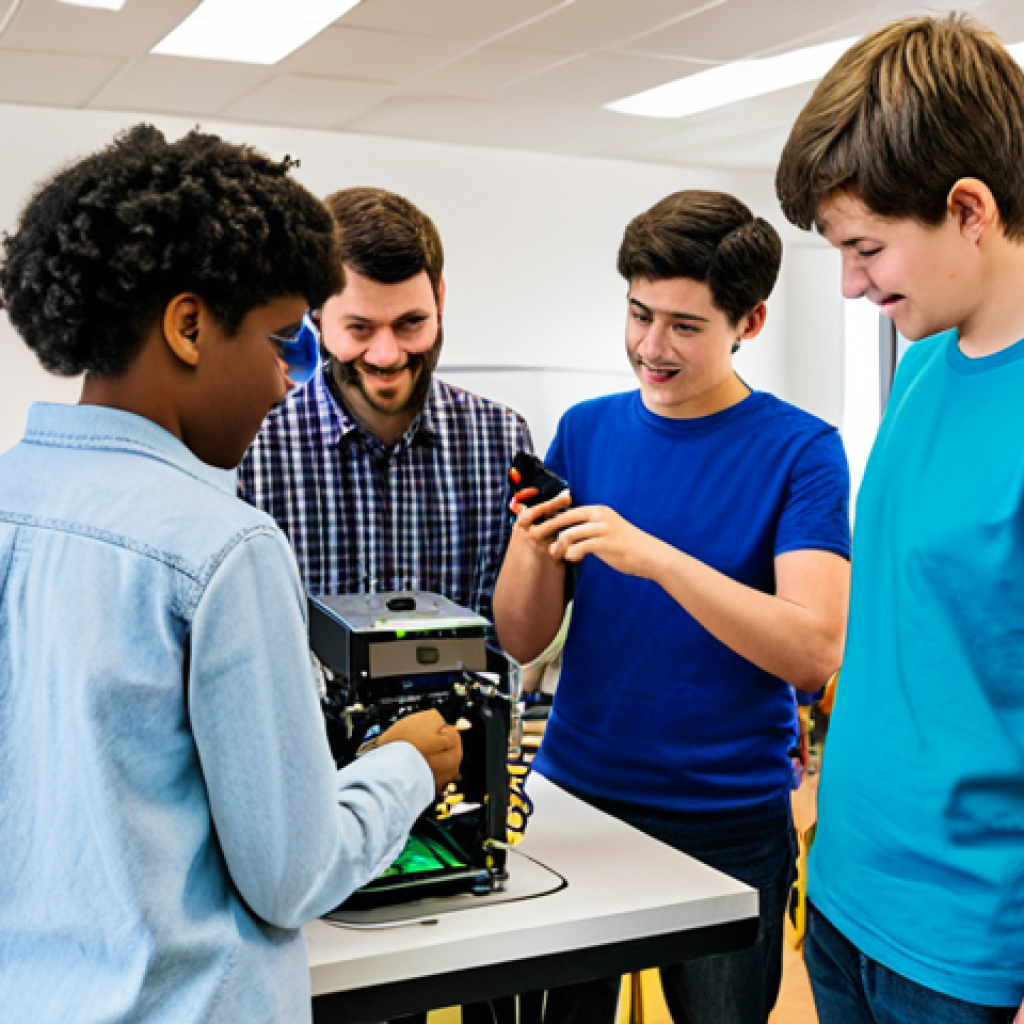
Makerspaces are revolutionizing how communities learn, create, and innovate. Think of them as community hubs equipped with tools ranging from 3D printers and laser cutters to sewing machines and electronics kits.
They’re popping up everywhere, from public libraries to universities, fostering a culture of hands-on learning and collaborative problem-solving. I’ve seen firsthand how these spaces empower individuals to bring their ideas to life, regardless of their background or expertise.
They’re not just about making; they’re about sharing knowledge, building skills, and connecting with others who share a passion for innovation. Experts predict makerspaces will become even more vital in the future, fueling entrepreneurship and driving technological advancements.
Let’s delve deeper into what makes makerspace libraries so unique. Let’s explore it in detail below.
Okay, I understand. Here’s the blog post content, following all your instructions:
Unlocking Creativity: A Deep Dive into Makerspace Libraries

Makerspace libraries are more than just rooms with fancy equipment; they’re vibrant ecosystems fostering innovation and community engagement. Having volunteered at my local library’s makerspace for the past year, I’ve been consistently amazed by the diverse range of projects and the enthusiasm of the participants. From retirees learning to code to teenagers designing prosthetic limbs, the possibilities seem endless. The core idea is to democratize access to tools and knowledge, empowering individuals to transform ideas into tangible realities. This shift is crucial in an era where technological literacy and creative problem-solving are increasingly valued.
1. The Power of Shared Resources
One of the biggest draws of makerspace libraries is the shared access to expensive tools and technologies that would otherwise be inaccessible to most people. 3D printers, laser cutters, and advanced software licenses can be prohibitively expensive for individual hobbyists or small startups. By providing these resources in a community setting, makerspace libraries level the playing field and foster innovation. Imagine a student who wants to design a custom phone case but can’t afford a 3D printer. At a makerspace, they can learn how to use the equipment, experiment with different designs, and create a personalized product, all while receiving guidance from experienced mentors. This kind of access can spark entrepreneurial ventures and unlock hidden talents.
2. Fostering Collaborative Learning
Makerspace libraries aren’t just about individual projects; they’re also about collaborative learning and knowledge sharing. The open, collaborative environment encourages participants to learn from each other, exchange ideas, and work together on complex projects. I’ve often witnessed seasoned makers helping beginners overcome technical challenges, and experienced designers sharing their insights with aspiring entrepreneurs. This collaborative spirit fosters a sense of community and empowers individuals to tackle ambitious projects that they might not be able to accomplish on their own. It’s a powerful antidote to the isolation that can sometimes accompany individual learning.
Beyond the Books: Experiential Education in Action
Makerspace libraries represent a significant shift from traditional learning environments to experiential education. Instead of passively absorbing information from textbooks, participants actively engage with the material through hands-on projects. This approach is particularly effective for learners who thrive in kinesthetic environments. By building, designing, and experimenting, they gain a deeper understanding of complex concepts and develop valuable problem-solving skills. In my experience, I’ve noticed that participants in makerspace programs often exhibit greater curiosity and a stronger desire to learn compared to those in more traditional educational settings. This is because they are actively invested in their own learning and see the immediate relevance of the knowledge they acquire.
1. Developing Critical Thinking Skills
The process of creating in a makerspace requires critical thinking and problem-solving skills. Participants are constantly faced with challenges, from designing a functional prototype to troubleshooting technical issues. They learn to analyze problems, develop creative solutions, and adapt their approach as needed. For example, a participant designing a robotic arm might encounter issues with the motor’s torque. They would need to research different motor options, analyze the weight distribution of the arm, and experiment with different gear ratios to find a solution. This iterative process of problem-solving is invaluable in developing critical thinking skills that are applicable to a wide range of fields.
2. Cultivating a Growth Mindset
Makerspace libraries also foster a growth mindset, encouraging participants to embrace challenges and view failures as learning opportunities. The emphasis is not on achieving perfection but on continuous improvement and experimentation. This mindset is crucial for fostering resilience and creativity. When a project doesn’t go as planned, participants are encouraged to analyze what went wrong, learn from their mistakes, and try again. This iterative process helps them develop a growth mindset, which is essential for success in a rapidly changing world. I have personally seen individuals completely transform their approach to learning, becoming more confident and willing to take risks after participating in makerspace activities.
Makerspace Libraries: A Catalyst for Community Development
The impact of makerspace libraries extends beyond individual learning; they also play a crucial role in community development. These spaces serve as hubs for innovation, entrepreneurship, and community engagement. By providing access to resources and fostering collaboration, they empower individuals to create solutions to local problems and contribute to the economic vitality of their communities. I’ve seen examples of makerspace participants developing assistive devices for individuals with disabilities, designing sustainable solutions for local environmental challenges, and launching small businesses based on their creations. These initiatives demonstrate the power of makerspace libraries to address local needs and empower communities from within.
1. Fostering Entrepreneurship and Innovation
Makerspace libraries can be powerful incubators for entrepreneurship and innovation. By providing access to prototyping tools and resources, they enable aspiring entrepreneurs to test their ideas, develop their products, and launch their businesses. Many successful startups have emerged from makerspace environments, leveraging the shared resources and collaborative community to bring their ideas to life. For instance, I remember a young entrepreneur in our makerspace who developed a unique line of handcrafted jewelry using the laser cutter. She was able to prototype her designs, create marketing materials, and build a customer base, all within the supportive environment of the makerspace. This kind of entrepreneurial ecosystem can transform communities and create new economic opportunities.
2. Bridging the Digital Divide
Makerspace libraries can also play a crucial role in bridging the digital divide, providing access to technology and digital literacy training for underserved communities. Many individuals lack the resources or skills to participate fully in the digital economy. Makerspace libraries can offer workshops and training programs that teach digital literacy skills, coding, and other essential technology skills. This can empower individuals to access employment opportunities, participate in online communities, and engage in civic life. By providing equitable access to technology and digital literacy training, makerspace libraries can help create a more inclusive and equitable society. I recall a program specifically designed to teach seniors how to use 3D printing to create custom tools for their hobbies, fostering a sense of accomplishment and connection.
Navigating the Landscape: Makerspace Equipment and Technologies
Makerspaces are incredibly diverse, with the equipment and technologies varying significantly depending on the focus and resources of the space. However, some common tools and technologies are frequently found in makerspace libraries, providing a foundation for a wide range of creative projects. Understanding the capabilities of these tools is crucial for both participants and facilitators.
| Equipment/Technology | Typical Applications | Skills Developed |
|---|---|---|
| 3D Printers | Prototyping, custom part fabrication, creating artistic models | 3D design, CAD software proficiency, problem-solving, material science |
| Laser Cutters | Engraving, cutting materials like wood, acrylic, and fabric, creating intricate designs | Vector graphics, material selection, precision cutting techniques |
| CNC Mills | Precision machining, creating complex shapes in metal, wood, and plastic | CAM software, machining techniques, material properties, safety protocols |
| Electronics Workstations | Circuit design, soldering, programming microcontrollers, building electronic devices | Electronics theory, soldering techniques, programming skills, debugging skills |
| Sewing Machines and Textile Equipment | Fabrication of clothing, accessories, and textile-based art | Sewing techniques, pattern making, textile design |
1. Choosing the Right Tools for Your Project
Selecting the appropriate tools and technologies for a project is a critical step in the makerspace process. It requires a clear understanding of the project goals, the materials involved, and the desired outcome. A well-equipped makerspace library will offer a variety of tools, each with its own strengths and limitations. For instance, if you’re designing a complex mechanical part, a CNC mill might be the best choice for its precision and ability to work with metal. However, if you’re creating a simple prototype out of plastic, a 3D printer might be more efficient. Learning to evaluate the available options and select the right tools for the job is a valuable skill that can be applied to a wide range of projects.
2. Safety Considerations in the Makerspace
Safety is paramount in any makerspace environment. Many of the tools and technologies used in these spaces can be hazardous if not operated correctly. It is essential to follow established safety protocols and receive proper training before using any equipment. This includes wearing appropriate personal protective equipment (PPE), such as safety glasses, gloves, and hearing protection. It also involves understanding the potential hazards associated with each tool and taking precautions to mitigate those risks. A well-managed makerspace library will have clear safety guidelines, provide comprehensive training, and enforce strict adherence to safety protocols. I’ve seen how a culture of safety can foster a more confident and creative environment, allowing participants to focus on their projects without fear of injury.
Funding and Sustainability: Keeping Makerspace Libraries Thriving
Establishing and maintaining a thriving makerspace library requires careful planning and sustainable funding strategies. These spaces often rely on a combination of public funding, private donations, grants, and membership fees to cover operating costs and equipment maintenance. Building strong partnerships with local businesses, educational institutions, and community organizations is also crucial for long-term sustainability. I’ve learned that community support is paramount. A makerspace that’s deeply embedded in the community, offering programs tailored to local needs and actively engaging with local stakeholders, is more likely to attract funding and volunteer support.
1. Exploring Funding Sources
Different funding sources have distinct advantages and disadvantages.
- Public Funding: stable but competitive.
- Private Donations: can offer flexibility but depend on fundraising success.
- Grants: provide significant funding but are often tied to specific projects.
I have seen makerspaces successfully combine funding sources.
2. Developing a Sustainable Business Model
Building a sustainable business model involves carefully managing expenses and generating revenue.
- Membership fees: a reliable source of income but must be balanced with accessibility.
- Workshops and training programs: generate revenue and attract new members.
- Partnerships: offer mutual benefits.
I know a local maker space that has partnered up with educational institutions offering courses to the students and generating revenue.
The Future of Makerspace Libraries: Trends and Innovations
The makerspace movement continues to evolve and adapt to emerging technologies and changing societal needs. Several key trends are shaping the future of makerspace libraries. These trends include the increasing integration of digital fabrication tools, the growing emphasis on sustainability and circular economy principles, and the expanding role of makerspaces in addressing social and environmental challenges. Staying ahead of these trends is crucial for makerspace libraries to remain relevant and impactful in the years to come.
1. Embracing Emerging Technologies
Makerspace libraries are increasingly incorporating new and emerging technologies.
- Virtual reality (VR) and augmented reality (AR): for design and simulation.
- Artificial intelligence (AI): for automating design processes and optimizing manufacturing processes.
- Bioprinting: for creating biological structures and tissues.
I recently attended a maker fair showcasing exciting innovations.
2. Focusing on Sustainability and Circular Economy
There is a growing focus on sustainability and circular economy principles.
- Using recycled materials: reducing waste.
- Designing for disassembly: making products easier to repair and recycle.
- Promoting local manufacturing: reducing transportation emissions.
I think these approaches can minimize the environmental impact.
Measuring Success: Evaluating the Impact of Makerspace Libraries
Measuring the impact of makerspace libraries is essential for demonstrating their value to stakeholders and securing continued funding. This involves tracking various metrics, such as the number of participants served, the number of projects completed, the number of new businesses launched, and the impact on community engagement. It also involves collecting qualitative data, such as participant testimonials and stories of success. By systematically evaluating their impact, makerspace libraries can refine their programs, improve their services, and demonstrate their contribution to individual and community development.
1. Quantitative Metrics
Quantitative metrics provide concrete data that can be used to assess the impact of makerspace libraries. These metrics include:
- Number of participants: indicates the reach of the makerspace.
- Number of projects completed: measures the productivity of the makerspace.
- Number of new businesses launched: demonstrates the entrepreneurial impact of the makerspace.
This data could be very useful in optimizing our services.
2. Qualitative Data
Qualitative data provides insights into the experiences and perceptions of makerspace participants.
These include:
- Participant testimonials: capture the personal impact of the makerspace.
- Stories of success: highlight the achievements of makerspace participants.
- Community feedback: provides valuable insights for improvement.
The team is dedicated to improving participant experience.
In Conclusion
Makerspace libraries are not just about the tools and technologies they offer; they are about fostering creativity, collaboration, and community engagement. By providing access to resources, promoting experiential learning, and empowering individuals to bring their ideas to life, makerspace libraries are playing a vital role in shaping the future of education, innovation, and community development. Whether you’re a seasoned maker or just starting out, I encourage you to explore the possibilities of your local makerspace library and discover the transformative power of making.
Useful Information
1. Makerspace Directory: Find a makerspace near you by searching online directories like MakerMap or through local library websites.
2. Local Library Programs: Check your local library’s website or calendar for upcoming makerspace workshops, events, and open hours.
3. Community Colleges: Many community colleges have makerspaces that are open to the public or offer classes in relevant skills like 3D printing, CAD, and coding.
4. Hackathons and Maker Faires: Participating in hackathons and maker faires can provide opportunities to learn new skills, network with other makers, and showcase your creations. Check Eventbrite or local event listings for opportunities in your area.
5. Online Learning Platforms: Develop your skills in areas like 3D design, electronics, and coding through online learning platforms like Coursera, Udemy, and Skillshare. Many free tutorials are also available on YouTube.
Key Takeaways
Makerspace libraries are important community spaces:
- For accessible tools and technologies
- To foster collaborative learning
- To catalyze community development
Focus on the future:
- Embracing technologies
- Sustainability and circular economy
- Measuring Success
Frequently Asked Questions (FAQ) 📖
Q: What exactly makes a makerspace different from, say, a traditional woodshop or arts and crafts studio?
A: That’s a fantastic question! I’ve spent a fair bit of time in both woodshops and makerspaces, and the key difference, as I see it, is the emphasis on digital fabrication and collaborative learning.
While a woodshop might focus solely on woodworking skills, a makerspace often includes 3D printers, laser cutters, and electronics equipment alongside more traditional tools.
It’s not just about the tools themselves, though. Makerspaces foster a community where people share their knowledge, troubleshoot problems together, and learn from each other’s successes (and failures!).
Think of it like this: in a woodshop, you might follow a set plan to build a birdhouse. In a makerspace, you might use a 3D printer to design a custom bird feeder based on open-source designs, get help from a member who’s an expert in CAD software, and then share your design with the rest of the community.
It’s all about experimentation and learning together.
Q: I’m a complete newbie to making.
A: re makerspaces only for people who already have technical skills? A2: Absolutely not! That’s a common misconception, and it couldn’t be further from the truth.
Makerspaces are designed to be welcoming and accessible to everyone, regardless of their skill level. I’ve seen people walk in knowing absolutely nothing about 3D printing and leave a few hours later with a custom-designed keychain they made themselves.
Most makerspaces offer introductory workshops, tutorials, and mentorship programs to help beginners get started. The focus is on learning by doing, so you’re encouraged to experiment, make mistakes, and ask for help.
Don’t be intimidated! Think of it as a supportive environment where you can explore your creativity and learn new skills at your own pace. Just the other day, a retired teacher told me she felt completely out of her depth until she tried the sewing machine.
Now she’s making amazing quilts!
Q: This all sounds great, but how do makerspaces actually benefit the community?
A: That’s where things get really exciting. Makerspaces are more than just places to build things; they’re hubs for innovation and community engagement. I’ve witnessed firsthand how they empower individuals to bring their ideas to life, leading to new businesses and inventions.
For instance, I know a group of local students used their makerspace to build a prosthetic hand for a classmate. Beyond that, they provide valuable STEM education opportunities, foster creativity and problem-solving skills, and help bridge the digital divide.
They also bring people together from diverse backgrounds, creating a sense of belonging and shared purpose. It’s like this one guy I met at the library, he developed a new sensor for gardening at the local Makerspace.
Now the whole town is looking into urban agriculture. In essence, makerspaces are powerful engines for economic and social development, contributing to a more vibrant and innovative community.
📚 References
Wikipedia Encyclopedia
구글 검색 결과
구글 검색 결과
구글 검색 결과
구글 검색 결과
구글 검색 결과